
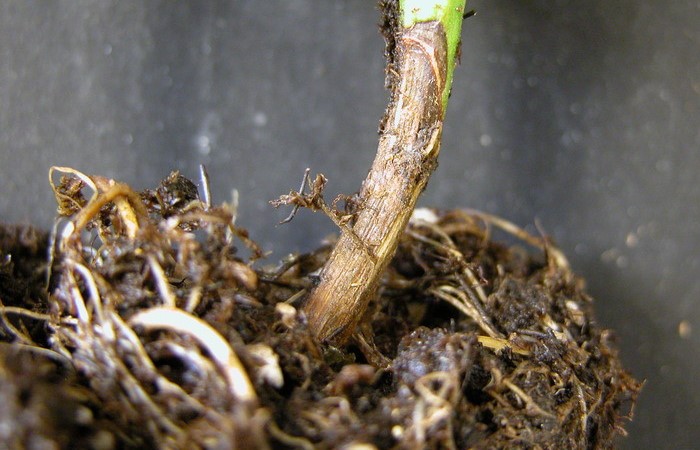
cause of the disease: Pythium, Phytophthora spp., and Rhizoctonia solani
This disease has a global distribution and causes seed rot, damping-off, soft rot of storage organs, and root rot. It is one of the most common greenhouse diseases, often caused by the soil-borne fungi Pythium, Phytophthora, and Rhizoctonia.
Species of these fungi have a wide host range and can survive for long periods in soil, plant residues, and weeds.
Damping-off generally occurs in soils with high moisture, compact structure, and poor drainage. In greenhouses, due to continuous cucumber cultivation and lack of crop rotation or fallow periods, damping-off disease is observed frequently.
Symptoms
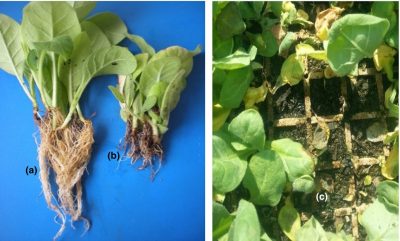
Seed rot occurs during or shortly after germination. The pathogens first attack underground organs and then progress to the collar region.
Although this disease can affect the plant at all growth stages, the most severe damage usually happens at the early seedling stage, particularly when transplanting from nursery to main soil. During this period, frequent watering (2–3 times) creates high moisture conditions, which enhances the activity of soil-borne fungi.
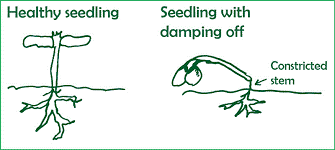
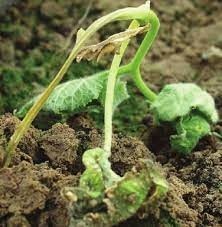
Symptoms appear as rot around the collar and stem narrowing, leading to vascular blockage, preventing nutrient transport between roots and aerial parts.
Dark-green, water-soaked, circular, depressed lesions (0.5–1 cm in diameter) develop, which quickly expand, turning brown or reddish.
The plants show yellowing and severe weakening.
Other factors that intensify infection include:
- Moisture stress
- Root damage by pests
- Cold and humid greenhouse conditions
Older plants may show wilting, stunting, or death of aerial parts.
The fruits of many plants, such as cucumber, potato, and cabbage, can also be attacked during transportation and storage, where their surfaces become covered with fungal mycelium and their internal tissues turn watery and soft.
Disease Management
- Plant resistant varieties
- Seed disinfection before planting
- Ensure animal manure is fully decomposed before adding it to the soil.
 Deep plowing of greenhouse soil (before planting) to improve soil aeration.
- Use healthy, certified seedlings
- Wash and disinfect nursery trays before planting
- Provide adequate soil drainage
- Observe proper plant spacing (avoid overcrowding)
- Manage irrigation to prevent excessive soil moisture
- Remove infected plant residues and weeds
- Disinfect soil using solarization (sun heating) or fumigation treatments (mandatory once a year in greenhouses)
- Apply registered fungicides through irrigation water in early growth stages
- Avoid heavy and compact soils for cucumber planting
- Reduce nitrogen fertilizer rates to lower disease severity
- Use of fungicides and copper compounds
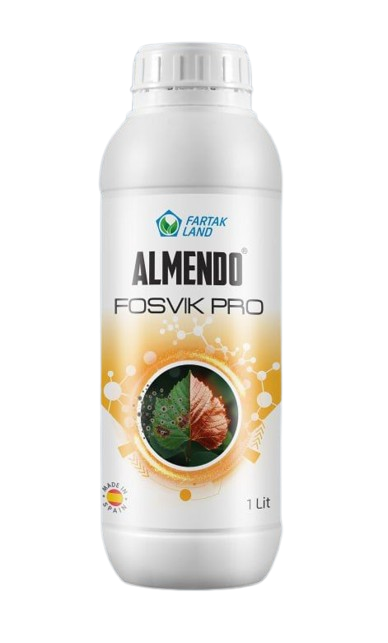
- The use of potassium phosphite compounds with copper, such as ALMENDO FOSVI K pro, greatly contributes to the prevention and control of the disease when used before and at the first signs of its appearance



It’s a fantastic product. I used it to control the apple scab disease
Thank you for your support.
Can this product be used on powdery mildew of roses?
yes of course, you can apply fosvi k pro at a rate of 1L/1000L of water.