
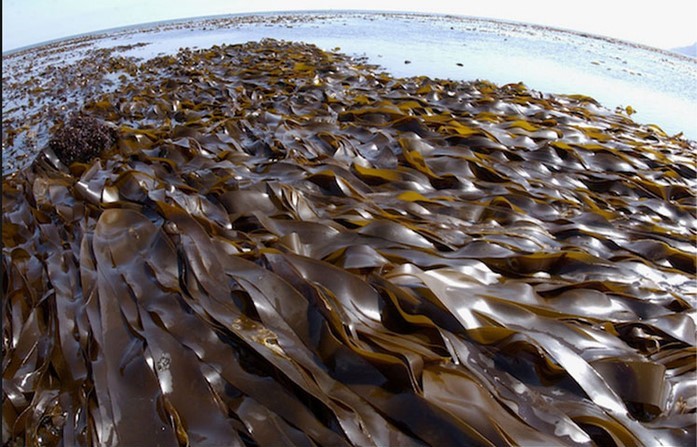
Abiotic stresses such as drought and salinity are among the main factors responsible for reduced crop yield and soil degradation worldwide. To meet the growing demand for food, improving agricultural productivity—especially under intensified stresses caused by climate change—is essential.
Recent studies show that seaweed-based biostimulants can offer a promising solution to these challenges by enhancing crop performance. These extracts facilitate nutrient uptake and improve growth performance both under stress conditions and in normal environments.
Beyond these well-known benefits, a report from the European Biostimulants Industry Council (EBIC) highlights that the fundamental aspects related to the composition of seaweed extracts directly influence the quality of growth stimulants containing them, and therefore their practical effectiveness in the field.
Seaweeds are highly diverse, varying in form, size, and life cycle, and are classified into three main groups:
Red algae (Rhodophyta)
Green algae (Chlorophyta)
Brown algae (Ochrophyta)
Some species are adapted to sheltered coastal areas, while others thrive in regions exposed to strong waves and tides. They live at different depths in marine or freshwater environments, playing vital ecological roles and are considered “ecosystem engineers.”
These three groups exhibit diverse physical structures, ranging from simple forms to branched ones. The bioactive compounds found in seaweeds include pigments, fatty acids, sterols, proteins, lipids, fibers, polysaccharides, and phytochemicals such as flavonoids and polyphenols, which are highly valuable nutritionally and have positive effects on human health. In addition, seaweeds contain minerals such as sodium, potassium, calcium, magnesium, iron, zinc, manganese, and copper, as well as vitamins, traces of fat, and sugars.
Bioactive compounds with industrial applications have been reported in macroalgae, leading to a wide range of uses, including food, fuel, plastics, cosmetics, and pharmaceuticals (anti-inflammatory, antitumor, antidiabetic, etc.). Seaweed has a long history of culinary use in coastal regions worldwide; for example, Ascophyllum nodosum, a brown seaweed found in Arctic waters, is commonly utilized.
Importance of extraction methods in the quality of seaweed-based biostimulants
The process of extracting active compounds from seaweed is crucial for the effectiveness of biostimulants. Different extraction methods directly affect the quality and concentration of bioactive components in the final product, thereby influencing its performance.
For instance, alkaline extraction of brown seaweed such as Ascophyllum nodosum has been shown to effectively release polyphenols and other beneficial compounds that enhance plant resistance to abiotic stresses like drought and high temperature.
Therefore, selecting an extraction process that best preserves these compounds is essential to ensure stronger and longer-lasting effects on agricultural crops.
Furthermore, sustainability in extraction methods has become an increasingly important aspect. Consequently, the industry seeks a balance between the effectiveness of seaweed-based growth stimulants and environmentally friendly practices, opening new avenues for research and development in these products.
Several mechanisms of action for seaweed-based growth stimulants exist:
Gene Expression Regulation: Activating or deactivating specific genes that influence plant growth and development. This expands the potential of algal growth stimulants in optimizing crop management strategies, particularly under environmental stress conditions.
Activation of Specific Metabolic Pathways: This mechanism enhances nutrient uptake and strengthens the plant’s natural defenses. For example, certain extracts from Ascophyllum nodosum have demonstrated the ability to improve oxidative stress tolerance by altering the plant’s metabolic profile and increasing the levels of protective metabolites like maltose and raffinose.
Enhanced Plant Tolerance: This fundamental mechanism involves preparing plants to cope with environmental stresses by activating molecules within metabolic pathways that increase plant resistance to abiotic and oxidative stress. Molecular readiness includes reducing reactive oxygen species (ROS) and regulating genes associated with cellular protection, thereby improving the plant’s ability to withstand adverse conditions.
Improved Nutrient Use Efficiency: An extract from Ascophyllum nodosum has shown the potential to reduce nitrogen fertilizer use by up to 27% without compromising crop yield. This is attributed to the extract’s ability to induce the expression of nitrate transporters and enhance the activity of enzymes involved in nitrogen metabolism.
These mechanisms offer a new perspective on how seaweed-based growth stimulants can be integrated into advanced agricultural strategies, providing innovative solutions for improving crop productivity and sustainability.
Research in seaweed extract-based growth stimulants continues to be a source of innovation, revealing new insights that could revolutionize agriculture in the coming years. As our understanding of their mechanisms of action deepens, it is likely that novel extraction techniques and formulations will emerge, further optimizing their efficacy. There are various methods for extracting seaweed extracts. The choice of extraction method depends on the type of seaweed, solvent, temperature, solution pH, time, and environmental conditions.
Alginates are natural polysaccharides primarily extracted from brown seaweeds (such as Ascophyllum nodosum and Laminaria species). These polymers consist of long chains of sugar acids and have widespread applications due to their physical and chemical properties.
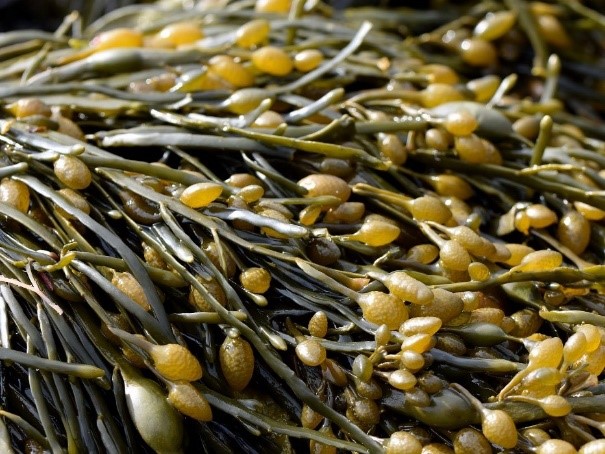
Extraction of Alginates from Brown Seaweed:
Hot Extraction: Dried or fresh seaweed is placed in an alkaline solution (typically sodium hydroxide) at temperatures ranging from 40 to 90°C for several hours. Heat accelerates the extraction rate; however, excessive temperatures or prolonged times can lead to the degradation of alginate polymer chains, reducing quality.
Cold Extraction: This method is carried out at lower temperatures (4 to 15°C) over extended periods. This approach better preserves the structure and properties of the alginate.
Seaweed Extract in ALMENDO VIGOR Product
ALMENDO VIGOR contains 15% seaweed extract derived from the brown seaweed Ascophyllum nodosum. This seaweed grows in intertidal zones, experiencing significant fluctuations in temperature and humidity, which prompts it to produce anti-stress compounds for survival.
Advantages of ALMENDO VIGOR:
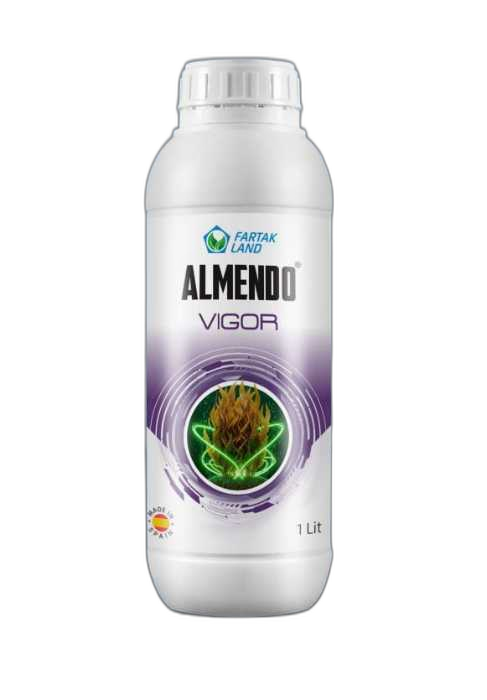
- Enhances the quantitative and qualitative properties of fruits.
- Increases flower production and activates vegetative growth in plants.
- Promotes uniformity and increases fruit size.
- Boosts fruit production in low-yield years.
- Increases plant resistance to potential damage from pesticides and environmental stresses.
This product is suitable for all agricultural crops. The optimal times for application are during vegetative growth, fruit sizing, and coloration, as well as after environmental stress events.