
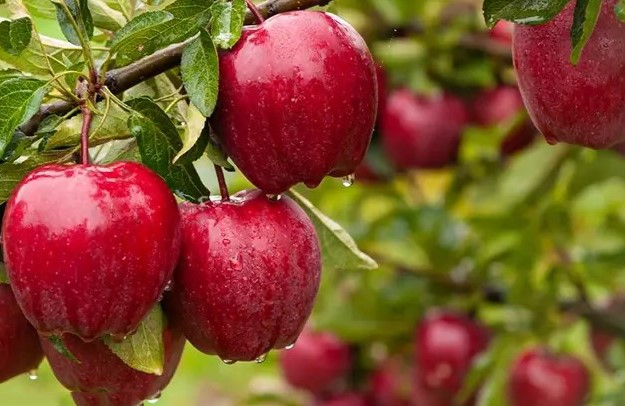
The color of fruit is one of the critical quality attributes that directly influences consumer acceptance, pricing, and the product’s market position. In many production systems, especially in orchards, disparities in final coloration can lead to reduced commercial classification, lower selling prices, and ultimately decreased profits for growers. Therefore, any factor that disrupts the pigmentation process in fruit requires precise analysis and nutritionally-based management grounded in scientific principles.
One of the common reasons for the deterioration of fruit appearance quality is the deficiency or untimely supply of essential nutrients, which subsequently interferes with the physiological pathways responsible for pigment formation. The lack of proper use of suitable fertilizers to address these deficiencies can have significant consequences, including decreased coloration intensity, uneven surface color, and reduced visual appeal. Conversely, properly applying balanced fertilizers according to plant needs—considered a practical and relatively low-cost approach—can enhance visual quality, increase added value, and improve both qualitative and quantitative yield.
Factors Influencing Fruit Coloration
In apple and pear varieties, skin color serves as an important quality index and often determines the grade classification of the product. Achieving the desired coloration in the production process results from the interaction of multiple factors, including growth conditions, orchard management, tree nutritional status, and environmental influences. Among these management factors, mineral nutrition holds a prominent position due to its direct role in regulating metabolism and secondary compound synthesis.
Proper nutrition enables the plant to carry out processes involved in pigment formation at the right time and with the desired intensity. From this perspective, growers seek strategies that not only maintain plant and fruit health but also increase the likelihood of achieving the market-preferred visual characteristics.
The Role of Potassium in Improving Fruit Coloration
Potassium is a highly utilized and essential element in fruit crops, playing a regulatory role in many physiological reactions. One of its significant effects on fruit quality is its association with increased synthesis and accumulation of pigments, especially anthocyanins. These compounds are responsible for red, purple, and darker hues in certain apple varieties, and the degree of coloration largely depends on the amount of pigment produced and transported.
In plant physiology, potassium can influence secondary metabolism pathways and enhance the efficiency of specific enzymatic processes, thereby increasing the plant’s capacity to produce anthocyanins. Consequently, adequate potassium supply at the appropriate timing—particularly during the coloring and final fruit maturation stages—can lead to increased intensity and uniformity of skin color in apple cultivars.
The Role of Amino Acids in Fruit Coloration
Amino acids function as natural chelators for essential micronutrients. This chelation enhances photosynthetic efficiency and metabolic pathways, directly contributing to improved fruit quality and yield.
Key Amino Acid Functions:
- Glycine: A vital precursor for chlorophyll synthesis and an efficient chelator for micronutrients and potassium.
- Glutamic Acid: Acts as a central metabolic driver; it is a precursor for chlorophyll, micronutrient chelation, and the synthesis of all amino acids, including Proline.
- Lysine: Supports pollen grain germination and regulates stomatal movement for better gas exchange.
- Methionine: A key precursor for ethylene production, which regulates ripening, while also activating protein metabolism and stomatal regulation.
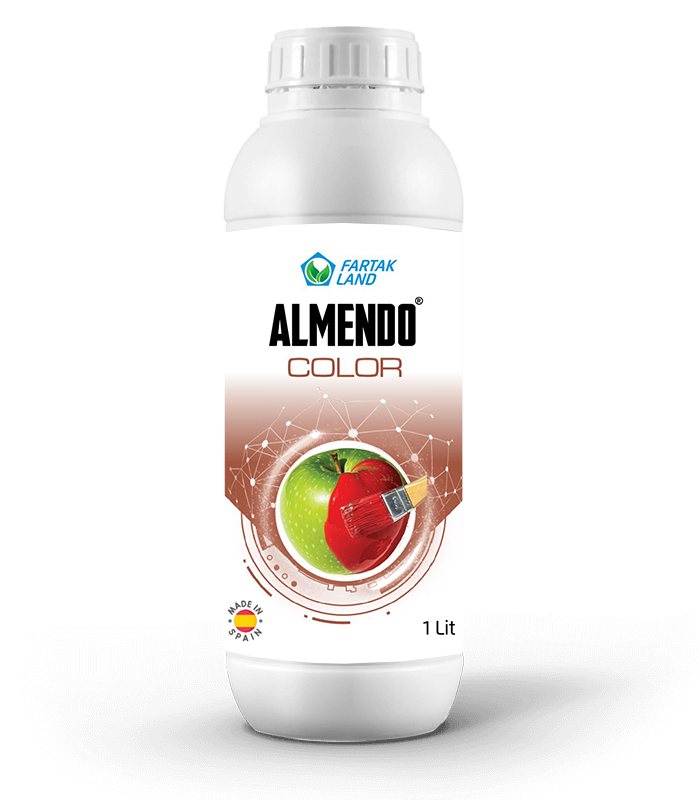
In this regard, ALMENDO COLOR fertilizer, as a specialized product, has a significant impact on fruit coloration. This fertilizer effectively contributes to the development of natural and desirable colors in produce by supplying the key nutrients required by the plant during the sensitive period of fruit growth and ripening, making it an ideal solution for farmers interested in enhancing the visual quality of their crops.
| Composition | %W/W |
| L-free amino acids | 4 |
| Phosphorous (P2 O5) | 12 |
| Potassium (K2 O) | 16 |
| Boron (B) | 0.5 |
| Copper (Cu-EDTA) | 0.002 |
| iron (Fe-EDTA) | 0.02 |
| Manganese (Mn-EDTA) | 0.01 |
| Zinc (Zn-EDTA) | 0.002 |
ALMENDO COLOR
-
- Growth stimulant due to amino acids and biological catalysts
- Nutritional support due to macro and micronutrients
- Energy provider due to organic phosphorus
Benefits of Using ALMENDO COLOR
- Improved size uniformity and growth of the fruit
- Early ripening of fruit
- Accelerated coloring process and increased sugar content in the fruit
- Increased fruit yield in low-yield years
- Prevention of fruit drop
- Amino acids present in ALMENDO COLOR play an important role in photosynthesis and plant fertility
- The micronutrients in ALMENDO COLOR are chelated with EDTA




Can it also be used for mango coloration?
yes for sure, ALMENDO COLOR is used on all agricultural crops as foliar spraying on the foliage and can be applied directly to the soil from the start of vegetative growth until before fruit harvest, except during the flowering period