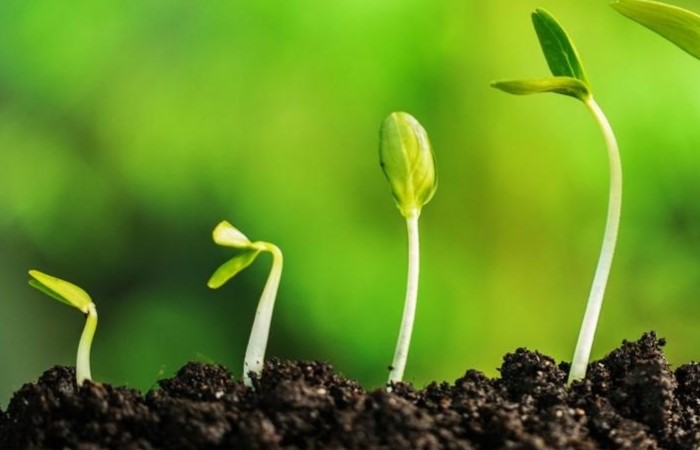
Plant hormones play a very important role in agriculture by increasing crop productivity. These compounds regulate processes such as germination and root and shoot growth, creating better establishment of the plant in the field and seedbed. Proper use of hormones leads to improved flowering, increased fruit set, and greater uniformity of the crop. They also enhance the plant’s tolerance to stresses such as drought, salinity, and temperature extremes, thereby increasing production stability. Plant hormones are highly effective in controlling flower and fruit drop and delaying senescence. Hormonal management can improve the visual quality and marketability of crops. Overall, the informed application of plant hormones is one of the pillars of modern agriculture and increasing the economic performance of crops.
Classification of plant hormones and the characteristics of each group
- Auxins
Auxin is one of the main growth hormones in plants. Its common form is indole-3-acetic acid (IAA), which is synthesized from the amino acid tryptophan. Auxins influence the stimulation of cell division and elongation in roots and directly cause an increase in the number and length of roots and the development of lateral roots. The increase in root surface area allows the plant to explore a larger volume of soil for the uptake of water and nutrients, which ultimately contributes to better plant growth. Thus, roots act as a reservoir of nutrients and water in the plant, which can be used to maintain metabolic processes when resources are limited.
At the biochemical level, auxins, by affecting the metabolism of carbohydrates and proteins—particularly through stimulating the activity of enzymes related to photosynthetic processes and protein synthesis—help improve root growth and energy transfer. They also help reduce the impact of environmental stresses such as drought and salinity by regulating antioxidant activities in the plant, enabling roots to effectively store nutrients and to utilize these reserves under stress conditions.

- Gibberellins
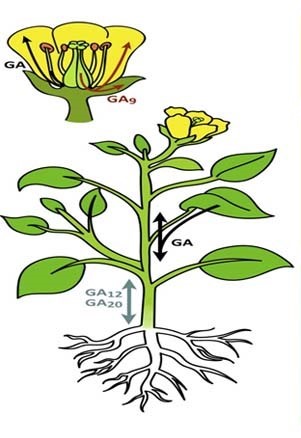
Gibberellins are a distinct group of plant hormones that share very high similarity. Gibberellic acid is one of the best-known and most important compounds in this group. Gibberellins play a key role in cell elongation, flowering, root elongation and formation, leaf growth, seed germination, and breaking dormancy in plants.
- Cytokinins
Cytokinins are involved in regulating the plant cell cycle and many other processes. These hormones affect the general metabolism of the plant, particularly the activity of enzymes and coenzymes involved in the biosynthesis of compounds and plant growth. Cytokinins modulate many of the physiological activities induced under drought stress. They can directly influence photosynthetic parameters such as chlorophyll content, the synthesis and breakdown of photosynthetic proteins, the composition and structure of chloroplasts, electron transport, and enzymatic activities.
- Ethylene
Ethylene, being gaseous in nature, moves through intercellular spaces and apoplast, rapidly diffusing throughout the plant. It regulates fruit ripening, processes related to leaf and flower senescence, leaf and fruit abscission, root hair development, and seedling growth. Ethylene also regulates the expression of genes associated with physiological stresses and pathogenesis. This hormone is also involved in plant–pathogen interactions and is often associated with symptoms such as leaf drop, yellowing, or necrosis.
- Abscisic Acid
Abscisic acid (ABA) is produced via the carotenoid biosynthesis pathway in plants and affects many aspects of vegetative growth. It typically acts through antagonistic interactions with auxin, cytokinin, gibberellin, ethylene, and brassinosteroids. ABA hormone has been introduced as one of the plant growth regulators involved in various plant developmental processes, including embryo maturation, seed development and germination, cell division and elongation, stomatal opening and closing, root development, and responses to environmental stresses such as drought, salinity, cold, darkness, pathogens, biotic attacks, and ultraviolet radiation. Abscisic acid plays a role in inducing drought stress resistance in plants by affecting ion uptake and distribution in plant tissues, stimulating the synthesis of antioxidant enzymes, and synthesizing compatible osmolytes. Furthermore, ABA can influence secondary metabolites such as anthocyanins and flavonoids and increase their levels in plants, including in hemp. This hormone also reduces primary metabolites such as chlorophyll and carotenoids in plants
- Jasmonic Acid
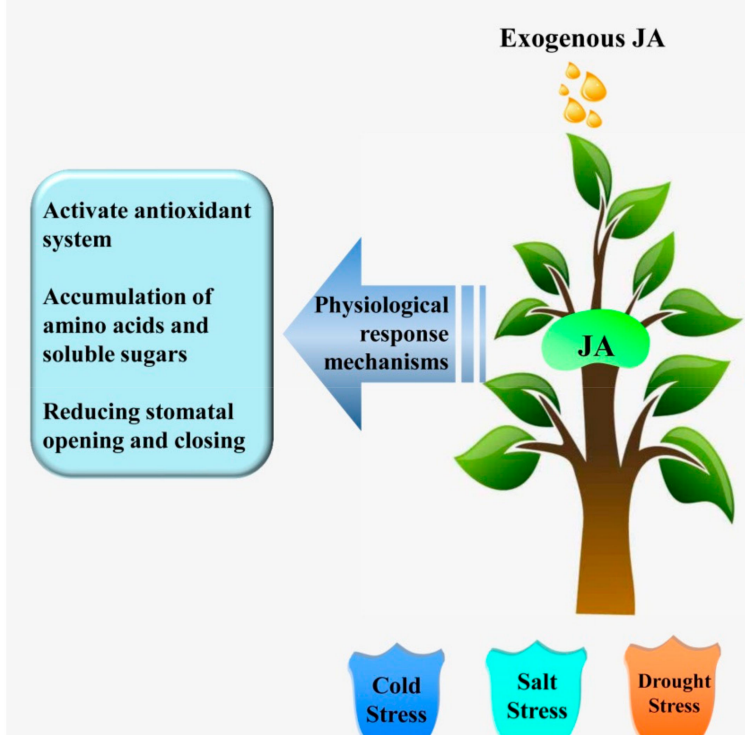
Jasmonic acid is a plant signaling molecule closely associated with plant resistance to abiotic stresses. Under abiotic stress conditions, jasmonic acid is typically involved in physiological responses.
Physiological responses often include:
- Activation of the antioxidant system (e.g., superoxide anion radical, peroxidase, and NADPH oxidase)
- Accumulation of amino acids (isoleucine and methionine) and soluble sugars
- Regulation of stomatal opening and closing
The role of jasmonic acid in plant response to abiotic stresses.
- Brassinosteroids
Brassinosteroids, as steroidal plant hormones, play a very important role in vegetative growth, such as pollen tube growth, stem elongation, leaf epinasty (downward bending of leaves), ethylene biosynthesis, and fruit development and ripening. Brassinosteroids also play a crucial role in plant responses to biotic and abiotic stresses such as cold, salinity, heat, and heavy metals. The protective role of brassinosteroids against cold stress has been reported in rice, maize, cucumber, and eggplant seedlings.
- Salicylic Acid
Salicylic acid, as a regulator, can modulate physiological, biochemical, and signaling functions in plant metabolic processes by producing messenger molecules such as reactive oxygen species. This phenolic hormone has numerous roles in plant growth and related metabolisms, including photosynthesis, respiration, replication, germination, defense responses, induction of primary and secondary metabolites, stomatal regulation, and antioxidant functions. Salicylic acid can be inactivated through glycosylation, methylation, and amino acid conjugation, regulating its mobility within the plant. Changes in the ratio of active to inactive forms can modulate the hormone’s role in plant growth and metabolic processes. Cell number and size play important roles in final plant growth, primarily controlled by cell division and expansion processes, which are determined by genetic constraints and environmental signals.
Hormone Interactions in Regulating Vegetative Growth
Auxin and Abscisic Acid (ABA)
- ABA plays a role in controlling seed dormancy and germination.
- Auxin contributes to promoting seed dormancy by activating ABA pathways and thus affects germination similarly.
Auxin and Brassinosteroids (BR)
- BRs are steroid hormones that stimulate cell growth.
- These two hormones can have synergistic or cross-regulatory effects, particularly in regulating root growth and cell division.
Auxin and Cytokinin (CK)
- Auxin generally stimulates root growth.
- CK promotes cell division and shoot/foliage growth.
Auxin and Ethylene
- Ethylene is effective in processes such as fruit ripening, stress response, and root growth regulation.
- Ethylene can alter the amount and distribution of auxin, and conversely, auxin can enhance the stability of ethylene signaling factors.
Auxin and Gibberellic Acid (GA)
- Both hormones play roles in germination, fruit growth, and stem development, and positively influence each other at certain stages.
Auxin and Jasmonic Acid (JA)
- Jasmonates are primarily involved in responses to injury and stresses and typically inhibit growth.
- In roots, JA reduces growth by decreasing auxin activity.
Auxin and Salicylic Acid (SA)
- SA is a defense hormone activated in response to disease.
- Both share common chemical precursors, and their pathways can influence each other.
Disadvantages of Using Plant Growth Regulators in Agricultural Products
- Unintentional introduction of hormones into crops, soil, and groundwater
- Potential toxicity of hormones to humans and animals, including carcinogenicity, disruption of growth and reproduction, neurotoxicity, and acute toxicity, notably in phenoxy growth regulators classified as herbicides.
Advantages of Using Plant Growth Regulators in Agricultural Products
- Increased agricultural crop production
- Increased marketability of products
- Improved storage and shelf life of products
- Reduced labor costs (e.g., thinning flowers and fruits)
- Determination of flower sex as desired by the producer or plant breeder
- Increased tolerance to pests and diseases
- Very high compatibility with the environment, with no or very low residues
- Improved plant establishment and uniform seedlings/plants in nurseries
- Improved harvest management and increased machinery operation time (e.g., sugarcane)
- Promotion of leaf abscission
- Delayed senescence in plants
- Production of seedless fruits
- Increased seed and fruit production and formation
- Prevention of seed dormancy
- Prevention of seed germination
- Control of flowering
- Use in tissue culture
- Extended vase life of cut flowers
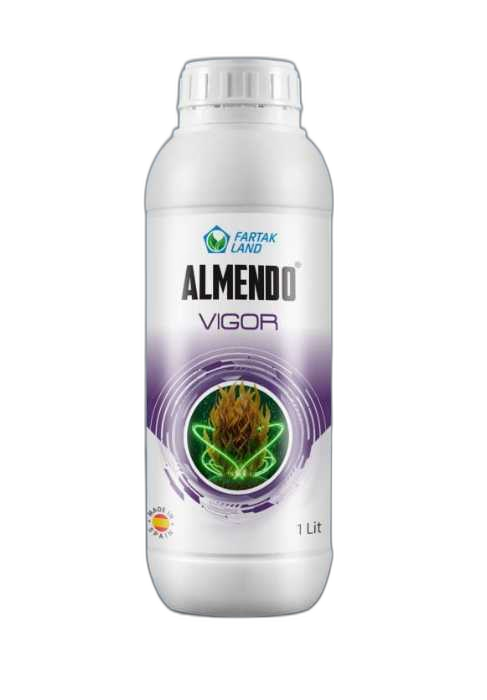
ALMENDO Flor and ALMENDO VIGOR contain natural plant hormones such as auxins, cytokinins, and gibberellins.
These compounds act as growth regulators at very low
concentrations.
ALMENDO Flor stimulates photosynthesis, delays plant senescence, and reduces untimely fruit drop, while ALMENDO VIGOR plays a significant role in activating vegetative growth and producing flowers and fruits.
Additionally, ALMENDO CITO contains the hormone cytokinin, which accelerates the process of cell division and increases fruit size.